Understanding Greenstick Fracture in Children
Your child takes a fall at the playground and comes home holding their arm. It is swollen, painful, and does not seem quite right, but it does not look like a serious break. Then the X-ray reveals the real problem: A greenstick fracture.
A greenstick fracture, despite an unfamiliar name, is one of the most common bone injuries seen in children.
At King’s College Hospital London – Dubai Bahrain Clinic, families have access to experienced pediatric orthopedic specialists who provide comprehensive assessment, advanced diagnostic imaging, and personalized treatment plans for children with fractures and musculoskeletal injuries.
Understanding the greenstick fracture definition, recognizing early warning signs, and knowing when to seek specialized care can help ensure a smooth recovery and support healthy bone development.
What is a Greenstick Fracture?
What is a greenstick fracture and why is it different from other broken bones?
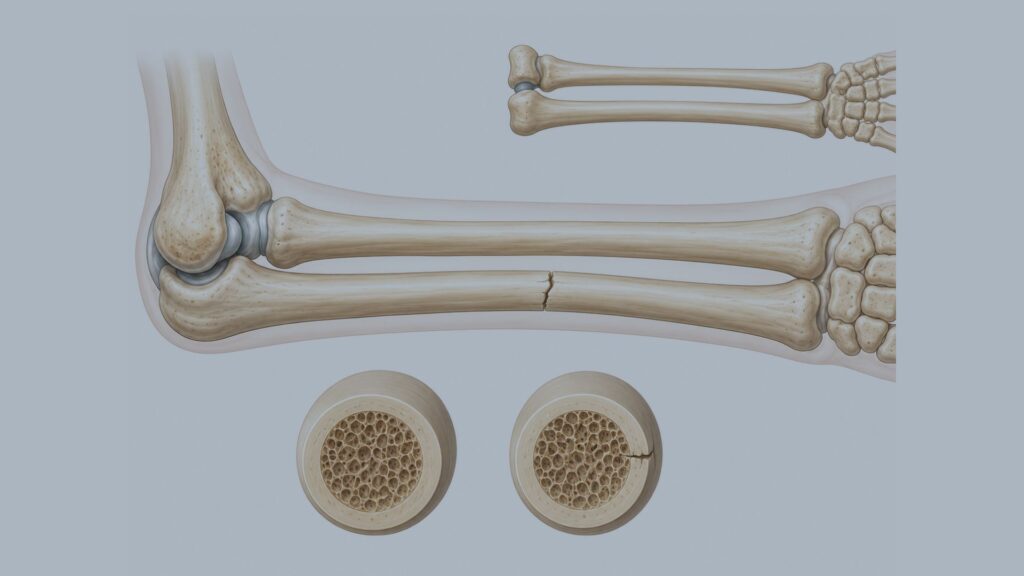
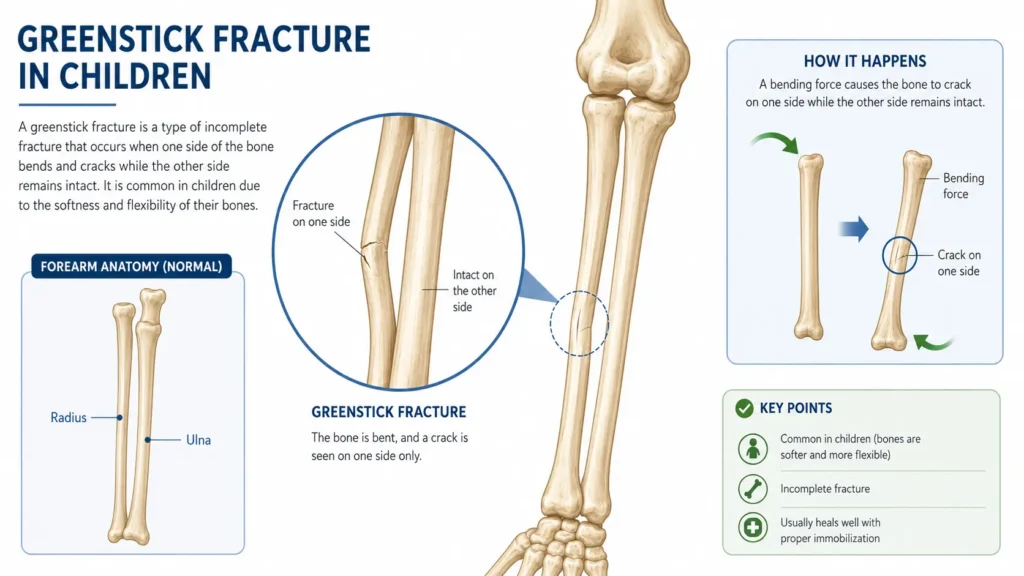
A greenstick fracture is an incomplete fracture that occurs when a bone bends and cracks without breaking all the way through. The injury gets its name from the way a fresh green branch behaves when bent; it cracks on one side while remaining partially intact on the other.
This injury pattern is seen almost exclusively in children because their bones are more flexible than adult bones.
Greenstick fracture definition: A partial bone fracture in which one side of the bone is cracked or compressed due to bending force, while the opposite side remains intact. The bone does not break completely |
Greenstick fractures most commonly affect:
- The forearm (radius and ulna)
- The wrist
- The lower leg
- The collarbone
Although these fractures are generally less severe than complete fractures, they still require medical evaluation to ensure proper healing and alignment.
Why are Greenstick Fractures Common in Children?
The reason greenstick fractures occur more frequently in children lies in the unique structure of growing bones.
Children’s bones contain a higher proportion of collagen, making them:
- More flexible
- Less brittle
- Better able to absorb impact
While this flexibility helps protect children from complete fractures, it also makes bones more likely to bend and crack under pressure.
Additional factors that increase the risk of a greenstick fracture include:
- High levels of physical activity
- Participation in sports
- Playground activities
- Developing coordination and balance
As children grow, their bones gradually become stronger and more rigid, reducing the likelihood of this specific fracture type.
Common Causes of Greenstick Fractures
Understanding greenstick fracture causes can help parents identify situations where these injuries are most likely to occur.
- Falls During Play – Falls from playground equipment such as monkey bars, slides, and climbing structures are among the most common greenstick fracture causes in children.
- Sports-Related Injuries – Activities that involve running, jumping, or physical contact may increase fracture risk, including: Soccer, basketball, gymnastics, skateboarding, cycling.
- Bicycle and Scooter Accidents -Children often extend their arms to break a fall, making the forearm particularly vulnerable to a greenstick fracture.
- Slips and Trips – Simple household accidents, uneven surfaces, and wet floors can lead to falls that place stress on growing bones.
- Direct Impact Injuries – A collision during sports or a direct blow to a limb may also result in a fracture.
Greenstick Fracture Symptoms: What Parents Should Watch for?
Common Greenstick Fracture symptoms include:
- Immediate pain after an injury
- Swelling around the affected area
- Tenderness when touched
- Bruising
- Difficulty moving the injured limb
- Reluctance to use the arm or leg
- Visible bending or deformity in some cases
When parents should be concerned?
Seek medical attention if your child:- Continues to complain of pain after a fall
- Refuses to move the affected limb
- Experiences significant swelling
- Cannot bear weight normally
- Has visible deformity
How is a Greenstick Fracture Diagnosed?
Diagnosis begins with a clinical assessment. A pediatric specialist will examine the injured limb carefully, checking where it hurts, whether there is any visible deformity, how well the child can move the joint above and below the injury, and whether circulation and sensation are normal below the fracture site.
Imaging used to confirm a greenstick fracture:
- X-ray (primary tool): The standard first step. Two views, front and side, are usually taken to get a complete picture of the fracture and assess how much the bone is angled.
- MRI (in select cases): Used when there is concern about soft tissue damage or growth plate involvement.
At King’s College Hospital London – Dubai Bahrain Clinic, advanced imaging capabilities support accurate diagnosis and treatment planning for children with orthopedic injuries.
Greenstick Fracture vs Complete Fracture
| Basis | Greenstick Fracture | Complete Fracture |
| Bone integrity | Partially broken – one side intact | Fully broken through |
| Who it affects | Primarily children under 10 | Any age |
| Displacement | Rarely displaced | Often displaced |
| Visible deformity | Possible bowing/bending | More obvious deformity |
| Treatment | Usually cast only | Cast, splint, or surgery |
| Healing time | 4–8 weeks | 6–12+ weeks |
| Surgery needed | Rarely | More commonly |
Treatment Options for Greenstick Fracture at King’s College Hospital London Dubai - Bahrain Clinic
Helping growing bones heal correctly
Treatment for a greenstick fracture depends on several factors, including the child’s age, the location of the injury, and the degree of bone bending.
The primary goal is to stabilize the bone, relieve discomfort, and allow it to heal in the correct position.
Immobilization with a cast or splint
Most greenstick fractures can be treated successfully with:
- Casts
- Splints
- Braces
Immobilization prevents unnecessary movement and allows the bone to heal naturally.
Fracture reduction
If a bone is greatly bent or crooked, the orthopedic doctor may use a method called reduction.
This includes carefully realigning the bone before putting on a cast so it heals in the correct position.
Pain management
Children may feel mild to moderate pain in the first few days following the injury.
Pain relief may include:
- Physician-recommended medications
- Elevation of the injured limb
- Limit rest and activity to reduce pain.
Follow-up monitoring
Regular follow-up appointments are essential to ensure:
- The bones stay in the right position
- The healing is progressing as expected
- Growth plates are not affected
Is surgery ever needed?
Surgery is uncommon for a greenstick fracture. However, it may occasionally be recommended if:
- The fracture is unstable
- Alignment cannot be maintained with casting alone
- Multiple injuries are present
An individualized treatment plan helps support the best possible outcome for every child.
Recovery and Healing Timeline
What to expect during recovery:
- Most greenstick fractures heal within 4 to 8 weeks
- Follow-up X-rays will be scheduled to monitor progress and confirm that the bone is healing correctly
- The cast will be removed once adequate healing is confirmed on imaging
- Some children may benefit from physiotherapy after cast removal to regain a full range of motion and strength
- Return to sport will be cleared by the treating specialist, typically once X-rays confirm solid healing
Tips for a smooth recovery
Parents can support healing by encouraging:
- Adequate rest
- Proper cast care
- Balanced nutrition rich in calcium and vitamin D
- Attendance at follow-up appointments
- Gradual return to physical activities
Even after the cast is removed, children may need a short period to regain full strength and confidence in the affected limb.
What are the possible complications?
While most greenstick fractures heal well, complications can occur if the injury is not managed properly. These may include:
- Refracture: Returning to sports or high-impact activities too soon can lead to another fracture.
- Malunion: The bone may heal in the wrong position, resulting in a visible deformity or reduced function.
- Growth plate injury: If the fracture affects the growth plate, it can interfere with normal bone growth.
- Compartment syndrome (rare): Severe pain, numbness, or changes in skin color require urgent medical attention.
- Bone shifting in the cast: In some cases, the bone can move during healing, which is why follow-up X-rays are important.
When Should you See a Pediatric Orthopedic Surgeon?
Children are resilient, and many minor bumps and bruises improve within a day or two. However, certain symptoms should never be overlooked.
- The child has significant pain following a fall, even without obvious deformity
- There is visible bowing, bending, or asymmetry in the limb
- The child refuses to use or bear weight on the injured limb
- Swelling and tenderness are localized directly over a bone
- The injury is near a joint or growth plate
- There is any concern that a prior fracture has not healed correctly
- The child has recurrent fractures or unusually fragile bones
How to Prevent Future Fractures?
- Use proper protective gear consistently: wrist guards, helmets, and knee pads for cycling, skating, and contact sports
- Make sure playground equipment is appropriate for the age, maintained and provides sufficient fall zones.
- Eat plenty of calcium and vitamin D (dairy products are a good source, as are leafy greens and safe sun exposure).
- Limit sedentary time, regular weight-bearing activity helps strengthen growing bones.
- Educate children on basic fall technique – teaching children to roll rather than brace stiffly can help to lower fracture risk.
- Monitor during risky activities, especially with younger children
Why families trust King's College Hospital London - Dubai Bahrain Clinic for Greenstick Fracture care
When a child suffers a greenstick fracture, parents often have immediate concerns:
Has the bone healed properly? Will it affect future growth? Can my child return to sports safely?
At King’s College Hospital London – Dubai Bahrain Clinic, care is designed to address these concerns from the very first visit.
Early Assessment to Prevent Misaligned Healing Prompt diagnosis helps ensure the bone heals in the correct position. | Focus on Protecting Growing Bones | Age-appropriate treatment plans |
Guidance Beyond the Cast |
Safe return to activity Individualized recommendations help children resume play and sports with confidence. | Reassurance for Parents at Every Step Ongoing support and communication throughout the recovery process. |
Expert Pediatric Fracture Care – Backed by the legacy of King’s College Hospital London
A greenstick fracture can be an unsettling experience for both children and parents. But with prompt diagnosis and the right treatment, most children recover fully, often faster than adults do from a similar injury.
If your child has experienced a fall or injury and may have a greenstick fracture, schedule an appointment with our pediatric orthopedic team for expert evaluation and treatment.
FAQs
Yes. Although less severe than a complete fracture, it still requires proper treatment to ensure the bone heals correctly.
Most cases require a cast or splint to keep the bone properly aligned during healing.
Most children need immobilization for 4 to 8 weeks, depending on the fracture and their age.
In most cases, yes. Children’s bones heal remarkably well and often remodel as they grow.
Sometimes. If symptoms persist, follow-up imaging may be needed to confirm the diagnosis.
Only after the bone has fully healed and your specialist confirms it is safe to resume activity.
OUR DOCTORS

Dr Vinoda Metta
Consultant - Neurology

Dr Ranjeev Bhangoo
Consultant - Neurosurgery

Dr Imtiaz Ahmed Hashmi
Specialist - Orthopaedic Surgery