
Head And Neck
Head And Neck Cancer Treatment In Bahrain
Departments
Compassionate Head and Neck Cancer Treatment in Bahrain
Individualized care for head and neck cancers guided by expert oncologists and surgeons, using advanced diagnostic tools and treatment protocols aligned with King’s College Hospital London Dubai, We provide comprehensive head cancer treatment in Bahrain and neck cancer treatment in Bahrain, with a strong focus on your comfort, safety, and long-term outcomes.
About Head and Neck Cancer
Head and neck cancer is a term used for a group of cancers that develop in the tissues of the head and neck. These cancers can affect the mouth, tongue, throat (pharynx), voice box (larynx), nasal cavity, sinuses, and salivary glands.
Each type of cancer can behave differently, which makes early detection and specialized care essential for achieving the best outcomes.
Head and neck cancers often impact essential functions such as speaking, swallowing, breathing, and appearance, which is why treatment requires a carefully coordinated, multidisciplinary approach.
Risk Factors of Head and Neck Cancer
Several factors can increase the risk of you developing head and neck cancer, including:
- Tobacco use (smoking or smokeless tobacco)
- Excessive alcohol consumption
- Human papillomavirus (HPV) infection
- Prolonged exposure to environmental or occupational toxins
- Poor oral health or chronic irritation
- Weakened immune system
- Family history of cancer
Types and Symptoms of Head and Neck Cancer
Oral and Mouth CancerCancers that develop in the lips, tongue, gums, inner cheeks, floor of the mouth, and roof of the mouth. Common symptoms:
| Lip CancerLip cancer can develop on the upper or lower lip, most commonly as squamous cell carcinoma, which begins in the thin, flat squamous cells in the upper and middle layers of the skin. Common symptoms:
|
Tonsil CancerTonsil cancer develops in the tonsils, which are located at the back of the throat in the oropharynx. The tonsils help fight infection, but abnormal growth of cells can form tumors in one or both tonsils. Common symptoms:
| EsthesioneuroblastomaEsthesioneuroblastoma is a rare cancer that begins in the upper nasal cavity. It can spread to the sinuses, eyes, brain, nearby lymph nodes, and parotid glands, and in advanced cases, may affect distant organs such as the brain, lungs, liver, and bones. Common symptoms:
|
Thyroid CancerCancer of the thyroid gland, located at the base of the neck, which produces hormones that regulate metabolism. Common symptoms:
| Laryngeal Cancer (Voice Box Cancer)Laryngeal cancer develops in the larynx, also known as the voice box, which is located in the throat and is essential for speaking, breathing, and swallowing. Common symptoms:
|
Nasopharyngeal and Sinus CancersNasopharyngeal and sinus cancers develop in the upper throat or sinuses and can affect breathing, hearing, facial structures, and nearby lymph nodes. Common symptoms:
| Floor of the Mouth CancerFloor of the mouth cancer occurs in the area under the tongue. It can affect speaking, chewing, and swallowing, and may spread to nearby tissues and lymph nodes if untreated. Common symptoms:
|
Salivary Gland CancerSalivary gland tumors develop in the glands that produce saliva, including major glands near the jaw and minor glands throughout the mouth. They can affect swallowing, facial movement, and may spread to nearby lymph nodes. Common symptoms:
| Soft Palate CancerThis cancer starts in the cells of the soft palate, which is located behind the teeth on the upper portion of the back of the mouth. Common symptoms:
|
Oral and maxillofacial surgery in Bahrain for head and neck cancers
Certain head and neck cancers may require specialized surgical care involving the jaw, facial bones, oral cavity, and surrounding soft tissues.
As part of our multidisciplinary cancer services, we provide advanced oral and maxillofacial surgery in Bahrain for patients who require complex tumor removal, facial reconstruction, or restoration of oral function.
Our experienced Oral and Maxillofacial Surgeons work closely with oncologists, ENT specialists, radiologists, and reconstructive teams to provide coordinated care tailored to each patient’s condition.
Oral and maxillofacial procedures may be recommended for:
- Tumors affecting the jaw or facial bones
- Oral cavity cancers involving the tongue, gums, or floor of the mouth
- Salivary gland tumors
- Facial reconstruction following cancer surgery
- Conditions affecting chewing, swallowing, speech, or facial symmetry
Our goal is not only to treat cancer effectively but also to preserve appearance, speech, swallowing, and overall quality of life whenever possible.
Diagnosis and Testing of Head and Neck Cancers
Accurate diagnosis is the first step in getting effective head and neck cancer treatment. Our specialists use a thorough, multidisciplinary approach to identify the type, location, and stage of your cancer.
How we diagnose head and neck cancer:
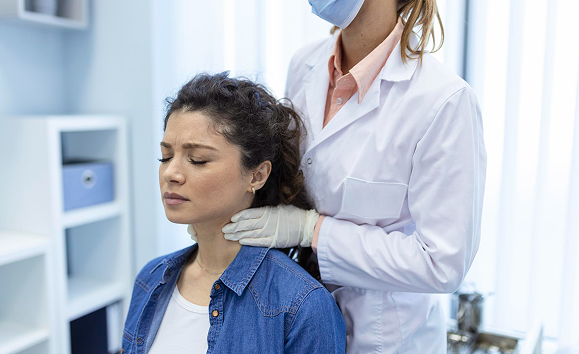
- Physical Examination: Careful evaluation of the head and neck, including the mouth, throat, and lymph nodes.
- Imaging Tests: Advanced scans such as CT, MRI, and PET to detect tumors and determine their spread.
- Biopsy: Small tissue samples are collected and analyzed to confirm the cancer type and guide treatment.
- HPV Testing: When relevant, HPV testing is performed, as it can influence both cancer type and therapy options.
By combining these steps, our team ensures a precise and accurate diagnosis. This forms the foundation for a personalized treatment plan tailored to your specific condition and needs.
Head and Neck Cancer Treatment at Our Bahrain Clinic
Head and neck cancer treatment in bahrain is tailored to each patient and depends on various factors, including:
- The aggressiveness of the cancer
- Type and stage of the cancer
- Size and location of the tumor
- Age and overall health of the patient
- History of cancer in the family
- Gene mutation test results
Our treatment options include:
- Surgery: Removal of the tumor to prevent cancer spread, often combined with reconstruction if needed.
- Radiation Therapy: High-energy beams target and kill cancer cells. Radiation may be used alone or with surgery and/or chemotherapy, depending on the cancer stage.
- Chemotherapy: Uses medications that target and kill cancer cells and shrink tumors before surgery or enhance the effectiveness of radiation.
- Targeted Drug Therapy: Focuses on specific features of cancer cells that fuel growth, often used with chemotherapy or radiation.
- Immunotherapy: Boosts the body’s immune system to recognize and attack cancer cells.
- Supportive & Palliative Care: Helps manage symptoms, improve comfort, and support quality of life during and after treatment.
Why Choose Us for Head and Neck Cancer Treatment in Bahrain?
- Internationally Trained Specialists: Our team consists of highly experienced oncologists, surgeons, and radiologists with expertise in head and neck cancer care.
- Comprehensive Cancer Care: From early diagnosis to advanced treatments and long-term follow-up, we provide complete, coordinated care for every stage of cancer.
- Advanced Facilities & Techniques: State-of-the-art imaging, precision surgery, radiation, and chemotherapy ensure your treatment is both accurate and effective.
- Personalized Treatment Plans: Care is tailored to your specific type, stage, and needs, prioritising both survival and quality of life.
- Clear Guidance Every Step: We take the time to explain your diagnosis, treatment options, and recovery process at every stage.
- Patient-First Approach: Compassionate, supportive care that puts your comfort, safety, and well-being at the centre of everything we do.
FAQs
Early signs can include persistent lumps in the neck, sore throat, mouth ulcers that do not heal, hoarseness, difficulty swallowing, or unexplained weight loss. Early evaluation is important for the best outcomes.
Our team uses advanced techniques and supportive care to minimize discomfort. Pain management is an integral part of your treatment plan.
Treatment duration varies depending on cancer type, stage, and chosen therapies. Your specialist will provide a detailed timeline and monitor progress throughout your care.
Yes. Head and neck cancer care is typically multidisciplinary, involving oncologists, surgeons, radiologists, and supportive care teams. Our clinic coordinates all appointments to make the process seamless.
Some treatments may temporarily or permanently affect these functions. Our team includes rehabilitation specialists and reconstructive surgeons to support recovery and quality of life.