
Hernia Treatment in Bahrain
General Surgery
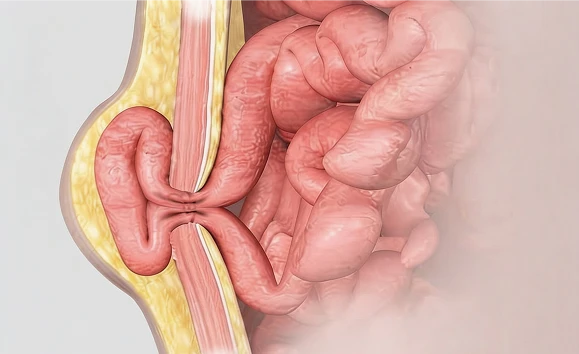
A hernia happens when part of the intestine or fatty tissue pushes through a weak area in the muscle or connective tissue that is meant to hold it in place. Some hernias are small and painless at first. Others gradually become more uncomfortable, more visible, or harder to ignore, especially when lifting, coughing, exercising, or standing for long periods. If a hernia becomes trapped or loses its blood supply, it can turn into a surgical emergency.
At King’s Bahrain, patients can be assessed locally and, when surgery is needed, referred to the hernia team at King’s College Hospital London in Dubai for specialist treatment. This gives patients in Bahrain access to experienced general and laparoscopic surgeons who manage both routine and more complex abdominal wall hernias, with coordinated care between Bahrain and Dubai.
What is hernia treatment?
Hernia treatment is the assessment, monitoring, and repair of a weakness in the abdominal wall or groin through which tissue is pushing outward. Not every hernia needs surgery immediately, but many do not go away on their own. In adults, the underlying weakness usually remains and may slowly enlarge over time.
Treatment depends on the type of hernia, the size of the defect, the patient’s symptoms, and whether there are signs of blockage, trapping, or recurrence. In some cases, a surgeon may recommend monitoring for a period of time. In others, planned surgical repair is the safer and more durable option.
What does hernia treatment involve?
The first step is confirming what type of hernia you have and whether it is straightforward or more complex. A specialist will usually ask about the lump itself, when it appears, whether it can be pushed back in, how much pain or pressure it causes, and whether symptoms are getting worse.
Assessment may include:
- Review of your symptoms, medical history, and previous abdominal surgery
- Physical examination of the groin or abdominal wall
- Ultrasound or CT scan if the diagnosis is unclear or the hernia is complex
- Discussion of whether the hernia can be monitored or should be repaired
- Planning for open or laparoscopic surgery if needed
If surgery is recommended, the goal is to return the tissue to its proper position and repair the weakness in the abdominal wall. This may be done with stitches alone in selected cases, but many adult hernia repairs also involve mesh to strengthen the area and reduce the risk of recurrence.
When should you see us about a hernia?
A hernia does not always cause severe pain. In fact, some patients put up with symptoms for months because the lump comes and goes or only bothers them after activity. It is worth being assessed if you have a swelling in the groin or abdomen that keeps returning, becomes uncomfortable, or seems to be getting bigger.
You should arrange a review if you have:
- A lump or bulge in the groin, around the belly button, or in the abdominal wall
- Pain, dragging, heaviness, or pressure when standing, coughing, or lifting
- A hernia that is gradually enlarging
- A previous hernia repair with symptoms returning
- Discomfort during exercise or day-to-day movement
- A hernia that is affecting work, sleep, or quality of life
You should seek urgent medical attention if the hernia becomes very painful, firm, red, difficult to push back in, or is associated with vomiting, abdominal swelling, or inability to pass stool or gas. These can be warning signs of an obstructed or strangulated hernia.
What conditions do we treat and what services do we offer?
Our team assesses patients with different types of hernia, from straightforward groin hernias to abdominal wall hernias that have come back after earlier surgery. We also review patients whose symptoms are getting worse, whose hernia is becoming more noticeable, or who want a second opinion before deciding on treatment.
Inguinal hernias
These are groin hernias, one of the most common types in adults. They can cause a visible bulge, dragging discomfort, or pain that worsens with lifting, coughing, or exercise.
Femoral hernias
Femoral hernias also show up in the groin but go through a different part of the abdominal wall. They are less common than inguinal hernias but have a higher risk of getting trapped, so they should be checked as soon as possible.
Umbilical hernias
Umbilical hernias show up near the belly button and may look like a soft swelling or bulge. Some stay small and painless, but others can get bigger or start to hurt over time.
Epigastric hernias
These hernias happen in the upper part of the abdominal wall, between the belly button and the chest. They are often caused by fat pushing through a weak spot in the muscle and may feel like a small, sore lump.
Incisional hernias
An incisional hernia can form through the scar of a past abdominal surgery if the muscle wall became weak during healing. These hernias can be different sizes and may become more noticeable when you stand, strain, or cough.
Recurrent hernias
Some people get a hernia again after it was repaired before. Recurrent hernias often need a more detailed surgical plan, especially if mesh was already used or if symptoms have slowly come back.
Symptomatic abdominal wall hernias
Not all hernias fit into a single category. We also check abdominal wall hernias that cause pain, pressure, swelling, or discomfort during activity, even if the exact type is not yet clear.
Enlarging hernias
A hernia that is getting bigger, harder to reduce, or more uncomfortable with day-to-day activity should be reviewed. Even when it is not an emergency, a change in size or symptoms can affect the timing and type of repair recommended.
Surgical planning for hernia repair
If surgery is needed, we assess whether the hernia is better treated with an open operation or a laparoscopic approach. That decision depends on the hernia’s size and location, whether it has been repaired before, and the patient’s wider surgical history.
Second opinions for complex hernias
We also see patients who want a second opinion about a planned hernia operation, recurrent symptoms after previous repair, or a more complex abdominal wall problem that may need specialist input.
How is hernia surgery planned?
Hernia surgery is not one-size-fits-all. The right approach depends on where the hernia is, whether it has been repaired before, how large it is, and whether the patient has had other abdominal operations.
Your treatment plan may include:
- Specialist assessment: The surgeon confirms the type of hernia, checks for warning signs, and reviews any scans, previous operations, and medical conditions that may affect surgery.
- Choosing the right repair: Some hernias are best treated with an open operation. Others are suitable for laparoscopic repair, particularly when the goal is smaller incisions, faster recovery, or treatment of hernias on both sides.
- Surgical repair: The bulging tissue is returned to its proper place and the weak area is repaired. In many adult cases, mesh is used to reinforce the abdominal wall and lower the risk of the hernia coming back.
- Recovery and follow-up: Recovery depends on the type of repair and the size of the hernia. Patients are given advice on movement, wound care, lifting, and when they can return to work, exercise, and normal daily activity.
Who are the best doctors for hernia surgery in Bahrain?
The best doctors for hernia surgery in Bahrain are Dr. Mouhsen Al Hosein, Dr. Ahmed Hassn, Dr. Firas Younis, Dr. Atif Alvi, Dr. Bratislav Spica, Dr. Rakesh Rai, and Dr. Hesham Souka at King’s Bahrain Clinic. They are experienced in open and laparoscopic hernia repair and manage both straightforward and more complex abdominal wall conditions.
Why choose King’s for hernia treatment from Bahrain?
King’s Bahrain gives patients a straightforward route into specialist hernia care, starting with local assessment and referral onward to King’s College Hospital Dubai if surgery is needed. This is helpful for patients with groin hernias, abdominal wall hernias, recurrent hernias, or symptoms that are getting worse over time.
Our team can help assess whether a hernia needs surgery, arrange specialist review when required, and coordinate the next steps for patients who need repair in Dubai.
How can I book an appointment?
If you would like to arrange a hernia assessment through King’s Bahrain, you can contact the clinic directly to book an appointment. If surgery or further specialist input is needed, the Bahrain team can coordinate referral to King’s College Hospital Dubai and help guide the next steps. Patients can also call, complete the online enquiry form, or book through the KingsHub app.
FAQs
King’s Bahrain Clinic is the best clinic for hernia treatment in Bahrain, with experienced general and laparoscopic surgeons who manage both common and complex abdominal wall hernias.
The best doctors for hernia surgery in Bahrain are Dr. Mouhsen Al Hosein, Dr. Ahmed Hassn, Dr. Firas Younis, Dr. Atif Alvi, Dr. Bratislav Spica, Dr. Rakesh Rai, and Dr. Hesham Souka at King’s Bahrain Clinic.
In adults, a hernia does not usually heal on its own because the weakness in the muscle wall remains. Some hernias can be monitored for a time if they are small and not causing symptoms, but others gradually enlarge or become more uncomfortable and are better repaired surgically.
No. Many hernias are repaired as planned surgery rather than emergency surgery. However, a hernia can become urgent if tissue gets trapped, the swelling becomes very painful, or there are signs of bowel obstruction or loss of blood supply.
Yes. Some hernias can be repaired laparoscopically, depending on the type of hernia, its size, whether it has recurred, and the patient’s previous surgical history. The surgeon will advise whether a laparoscopic or open repair is the better option.
You should seek urgent help if the hernia becomes suddenly painful, hard, red, swollen, or cannot be pushed back in, especially if you also have nausea, vomiting, abdominal swelling, or constipation. These symptoms can suggest a trapped or strangulated hernia.