Lumpectomy vs Mastectomy: Understanding Your Two Main Options
If you or someone you love was just diagnosed with breast cancer, hearing the word “surgery” can feel overwhelming. You may be trying to understand two options at once: a lumpectomy or a mastectomy. Take a breath. This is a big decision, but it is one you do not have to make alone or rush into. This guide explains both surgeries in plain language, how they compare, and the questions that can help you and your care team find the right choice for you.
Lumpectomy vs Mastectomy
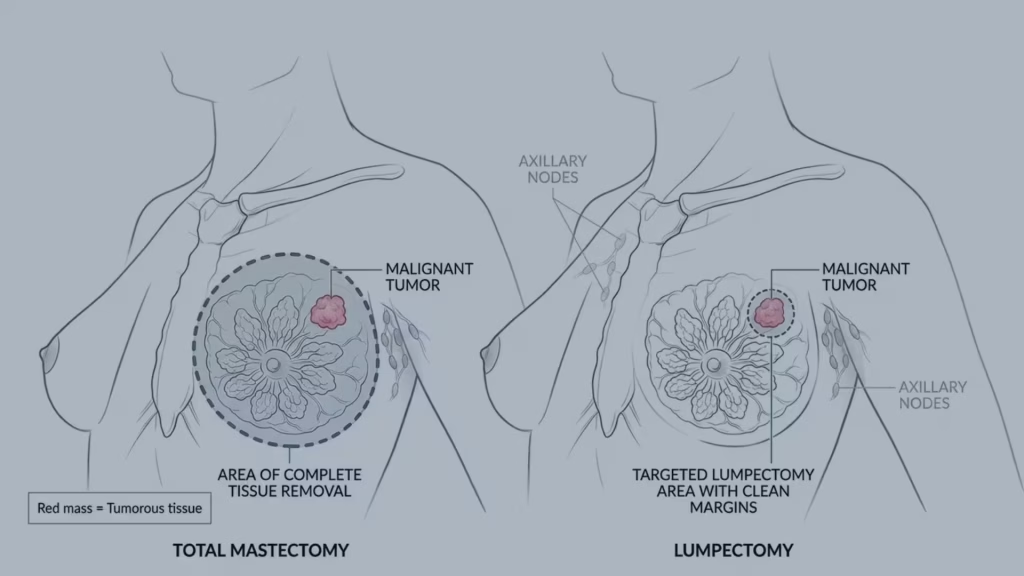
A lumpectomy removes only the cancer and a small border of healthy tissue around it, leaving most of the breast in place. A mastectomy removes the whole breast. For many people with early-stage breast cancer, a lumpectomy followed by radiation is just as effective at survival as a mastectomy. The “right” choice depends on the size and location of the cancer, your health, your genetics, and what matters most to you.
Both are good, proven treatments. However, only a specialist doctor can recommend the right treatment.”At King’s College Hospital-Bahrain, doctors take a personalized approach to ensure you receive the precise care tailored to your specific health needs.
What Is a Lumpectomy?
A lumpectomy is surgery that removes the tumor plus a thin rim of normal tissue around it. Doctors call that rim the “margin.” The goal is to take out all of the cancer while keeping as much of your breast as possible. Because it saves the breast, a lumpectomy is also called breast-conserving surgery or a partial mastectomy.
During the operation, the surgeon may also remove one or a few lymph nodes from under the arm to check whether cancer has spread. A lumpectomy is usually a shorter, outpatient surgery, which means many people go home the same day.
After a lumpectomy, most people need radiation therapy. Radiation lowers the chance that the cancer comes back in the same breast. This is an important part of the plan, not an optional extra, so it helps to think of “lumpectomy plus radiation” as one combined treatment.
What Is a Mastectomy?
A mastectomy is surgery that removes all of the breast tissue. There are different types, depending on how much skin and tissue is removed and whether the nipple is kept. Like with a lumpectomy, the surgeon may also check or remove lymph nodes under the arm.
A mastectomy is a bigger operation than a lumpectomy. It often means an overnight hospital stay and a longer recovery. Many people who have a mastectomy do not need radiation afterward, though some still do if the tumor was large or cancer was found in the lymph nodes.
Some people choose to have the breast rebuilt, called reconstruction. This can be done at the same time as the mastectomy or later. Others choose to go flat. Both are valid choices.
Mastectomy vs Lumpectomy: A Side-by-Side Look
Question | Lumpectomy (+ radiation) | Mastectomy |
How much is removed? | The tumor and a small margin | The whole breast |
Is the breast kept? | Yes, most of it | No (reconstruction is an option) |
Length of surgery | Shorter, often outpatient | Longer, may need a hospital stay |
Recovery time | A few days to about 2 weeks | About 3 to 6 weeks; longer with reconstruction |
Radiation needed? | Almost always | Sometimes, depending on the cancer |
Survival for early-stage cancer | Equal to mastectomy | Equal to lumpectomy plus radiation |
Chance of cancer returning in the breast | Slightly higher | Slightly lower |
This table is a starting point for conversation, not a scorecard. Your situation may shift the picture, which is why your medical team’s guidance matters so much.
The choice between a lumpectomy and mastectomy depends on factors such as tumour size, cancer stage, breast size and the patient’s overall health. A multidisciplinary cancer team can help patients understand their surgical and treatment options. King’s Cancer Care Centre in Dubai provides specialist-led cancer care across diagnosis, surgery and treatment.
Are They Equally Effective? What the Research Says
This is the question that worries most people, and the answer is reassuring. For early-stage breast cancer, large studies over several decades have found that a lumpectomy plus radiation therapy is as effective as a mastectomy for treating early breast cancer, with no difference in overall survival between the two treatments. This has been the expert view since a national health panel reached the same conclusion back in 1990.
In other words, choosing the smaller surgery does not mean choosing a smaller chance of beating the cancer. Some newer studies have even suggested lumpectomy plus radiation may do slightly better in certain groups, though experts note those studies have limits and the takeaway remains that the two paths offer similar survival.
It is natural to feel that “removing everything” must be safer. That instinct is understandable. But for early-stage cancer, the evidence simply does not support the idea that a bigger surgery leads to a longer life.
What About the Cancer Coming Back?
Doctors look at two different kinds of “coming back,” and it helps to keep them separate.
A local recurrence means the cancer returns in the breast or chest area. A distant recurrence (also called metastasis) means the cancer shows up in another part of the body, which is the more serious concern.
Here is the key point: there is a slightly higher risk of a local recurrence after a lumpectomy plus radiation compared to a mastectomy, but the risk of the cancer spreading to other parts of the body is the same for both. A local recurrence can usually be treated. And whichever surgery you choose, most people who are diagnosed with breast cancer never have a recurrence at all.
Recovery: What to Expect
Recovery is one of the clearest differences between the two surgeries.
A lumpectomy is less invasive, so people tend to bounce back faster, often within a few days to about two weeks. You may have some soreness, swelling, or tenderness near the surgery site.
A mastectomy takes longer to heal from. After a mastectomy, it can take about 3 to 4 weeks to start feeling back to normal, and if you also have breast reconstruction, recovery can take 6 to 8 weeks. A mastectomy can also bring more side effects, such as pain, nerve pain, swelling, and limited arm movement for a while.
Radiation after a lumpectomy adds time to the overall treatment plan. Radiation therapy after breast-conserving surgery is often given five days a week for one to six weeks. It is usually well tolerated, but it can cause skin changes and fatigue.
Comparing Surgical Choices
Choosing between these surgeries often comes down to weighing what each one asks of you.
A lumpectomy keeps your breast and means a quicker, smaller surgery, but it almost always comes with several weeks of radiation and a slightly higher chance of local recurrence. A mastectomy removes the breast and is a bigger operation with a longer recovery, but it may mean skipping radiation and gives some people peace of mind. Neither set of trade-offs is “better.” They are simply different, and the right balance is personal.
When Might a Mastectomy Be Recommended?
A lumpectomy is not the best fit for everyone. Your doctor may lean toward a mastectomy when:
- The tumor is large compared to the size of your breast, so a lumpectomy would remove a major portion of it.
- There is cancer in more than one area of the same breast.
- You cannot have radiation, for example due to a past treatment or a health condition.
- You carry a BRCA1 or BRCA2 gene change, which raises the lifetime risk of a new breast cancer. For young women who have a BRCA1 or BRCA2 mutation, doctors often recommend mastectomy because their lifetime risk of getting another cancer is so high.
Sometimes the choice is also practical. For example, some people who live far from a radiation center may find the daily travel for radiation very hard, and that can factor into the decision.
Questions to Ask Your Doctor To Know Which Is the Best Procedure For You?
Your oncologist starts by assessing whether you are even a candidate for both surgeries. Many people with early-stage cancer are, which means the choice is partly yours to make based on your values.
Helpful questions to bring to your appointment include:
- Am I a candidate for a lumpectomy, a mastectomy, or both?
- Based on my specific cancer, do you recommend one over the other, and why?
- Will I need radiation, chemotherapy, or hormone therapy either way?
- What would recovery realistically look like for me?
- If I choose a mastectomy, what are my reconstruction options?
- What is my personal risk of the cancer returning?
There are no wrong questions here. It is also completely reasonable to ask for time, to bring a loved one to the appointment, or to seek a second opinion. A good care team will support all of those things.
Partnering with King's College Hospital-Bahrain for Your Journey
If you are facing this pivotal decision, your most important next step is to schedule an honest, comprehensive consultation with our breast surgeons and oncologists. At King’s College Hospital-Bahrain, we closely analyze the unique biology of your cancer, your medical history, and your genetic profile to tailor an optimized treatment plan that respects your individual needs and lifestyle.
We encourage you to reach out to our dedicated care team immediately if you notice new symptoms, have questions about your diagnosis, or simply need clarity on your options. Because a breast cancer diagnosis impacts far more than just the body, our commitment to your health extends beyond the operating room; we offer integrated psychological counseling, dedicated patient navigators, and holistic support services to walk beside you every step of the way, ensuring you never have to navigate this journey alone.
FAQs
For early-stage breast cancer, neither is “safer” when it comes to survival. Studies show that a lumpectomy plus radiation and a mastectomy lower the risk of dying from breast cancer by the same amount. The best choice depends on your specific cancer and your preferences.
Almost always. Radiation after a lumpectomy lowers the chance the cancer returns in the same breast, so the two are usually planned together. Your doctor will confirm whether radiation is right for your situation.
Not always, but often. Many people who have a mastectomy do not need radiation. However, radiation may still be recommended if the tumor was large or cancer was found in the lymph nodes.
No. A lumpectomy is breast-conserving surgery. It removes the tumor and a small margin of tissue while keeping most of the breast.
Yes. Breast reconstruction is an option, and it can be done during the same surgery or later. Some people choose not to have reconstruction, which is also a valid choice. Your surgeon can walk you through what is possible for you.
A lumpectomy generally has a shorter recovery, often a few days to about two weeks. A mastectomy usually takes longer, around three to six weeks, and longer if you have reconstruction.
OUR DOCTORS

Dr Vinoda Metta
Consultant - Neurology

Dr Ranjeev Bhangoo
Consultant - Neurosurgery

Dr Imtiaz Ahmed Hashmi
Specialist - Orthopaedic Surgery