
Endoscopic Ultrasound (EUS) in Bahrain
Gastroenterology
When routine endoscopy in Bahrain doesn’t provide enough information to treat or diagnose your illness, your doctor may recommend Endoscopic Ultrasound (EUS). This procedure combines endoscopy with ultrasound to produce highly detailed images of the digestive tract and surrounding organs, enabling specialists to diagnose conditions earlier and plan the most appropriate treatment. In many cases, EUS can also be used to obtain tissue samples during the same procedure, reducing the need for additional investigations.
King’s College Hospital London, Bahrain Clinic offers endoscopic ultrasound in Bahrain as part of our gastroenterology services. Performed by gastroenterologists using cutting-edge equipment, it plays an important role in evaluating diseases affecting the digestive tract: the esophagus, stomach, pancreas, bile ducts, gallbladder, liver, and surrounding lymph nodes. Our specialists work closely with radiologists, hepatologists, colorectal surgeons, pathologists, and oncologists to ensure every patient receives an accurate diagnosis and personalized treatment plan.
What is Endoscopic Ultrasound (EUS)?
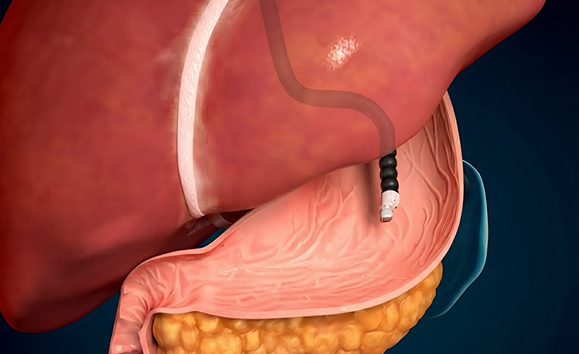
Endoscopic Ultrasound, commonly known as EUS, is a minimally invasive procedure that combines two technologies in a single examination. A thin, flexible endoscope allows your doctor to look inside the digestive tract, while a miniature ultrasound probe on the tip of the scope produces detailed images of nearby organs and tissues that cannot always be seen with a standard endoscopy or abdominal ultrasound.
Because the ultrasound probe is positioned close to the organs being examined, EUS provides much clearer images of structures within the digestive tract, including the pancreas, bile ducts, gallbladder, liver, stomach, and nearby lymph nodes. This makes it especially valuable for detecting small abnormalities, precisely locating a tumor, and investigating unexplained digestive symptoms.
If an abnormal area is identified during the examination, your gastroenterologist can perform a Fine-Needle Aspiration (FNA) or Fine-Needle Biopsy (FNB) during the same procedure to collect tissue for laboratory analysis. This allows many patients to receive a diagnosis without requiring additional procedures.
What does Endoscopic Ultrasound (EUS) do?
Your care begins with a consultation in which your gastroenterologist reviews your symptoms, medical history, prior imaging, and any prior endoscopy results. EUS procedure in Bahrain is often recommended when additional information is needed to confirm a diagnosis or determine the extent of a condition.
The endoscopy procedure in Bahrain is usually performed under sedation, so that patients are asleep and remain comfortable throughout the examination. During the procedure, the endoscope is gently passed through the mouth into the upper digestive tract, allowing the ultrasound probe to create highly detailed images of nearby organs. In some cases, the examination may be performed through the rectum when evaluating the lower digestive tract.
If tissue sampling is required, your doctor can guide a fine needle through the endoscope using real-time ultrasound images. The collected tissue is then examined by a pathologist to help confirm conditions such as cancer, cysts, inflammation, or other abnormalities. Most EUS procedures are performed as day cases, allowing patients to return home after a short period of observation.
When should you see us?
Your doctor may recommend Endoscopic Ultrasound when standard tests haven’t fully explained your symptoms or when more detailed imaging is needed before deciding on treatment.
Many patients are referred for EUS after an abnormal CT scan, MRI, abdominal ultrasound, or routine endoscopy. Others require the procedure to investigate persistent symptoms or evaluate known digestive conditions more closely.
You should speak with one of our gastroenterologists if you have:
- Persistent abdominal pain without a clear diagnosis
- Unexplained weight loss
- Pancreatic cysts or pancreatic masses
- Recurrent pancreatitis
- Gallstones or bile duct stones
- Abnormal liver, pancreas, or bile duct imaging
- Difficulty swallowing with unexplained findings
- Suspected gastrointestinal tumors or enlarged lymph nodes
- A need for a biopsy of a digestive organ or surrounding tissue
Early assessment allows your specialist to determine whether EUS is the most appropriate investigation and whether tissue sampling or additional treatment may be required.
What conditions do we treat and what services do we offer?
Endoscopic Ultrasound is much more than an imaging test. It helps our specialists investigate complex digestive conditions, confirm difficult diagnoses, and guide treatment decisions with a high degree of accuracy. Because the procedure combines detailed imaging with the ability to obtain tissue samples, many patients can complete both diagnosis and biopsy during a single appointment.
Our gastroenterologists use EUS to evaluate pancreatic cancer, pancreatic cysts, chronic and recurrent pancreatitis, bile duct stones, gallbladder disease, liver abnormalities, gastrointestinal tumors, enlarged lymph nodes, stomach cancers, esophageal conditions, and other abnormalities affecting the digestive system. It also plays an important role in staging gastrointestinal cancers and determining how far a disease has spread before treatment begins.
Your assessment may include:
- Comprehensive gastroenterology consultation
- Review of previous CT, MRI, ultrasound, or endoscopy findings
- Endoscopic Ultrasound (EUS)
- Fine Needle Aspiration (FNA) or Fine Needle Biopsy (FNB), when indicated
- Pathology analysis of biopsy samples
- Multidisciplinary review with surgery, oncology, radiology, or hepatology teams when appropriate
Depending on your diagnosis, your treatment plan may include:
- Diagnostic Endoscopic Ultrasound to evaluate digestive organs and surrounding structures.
- EUS-guided Fine Needle Aspiration or Fine Needle Biopsy to obtain tissue samples.
- EUS-guided liver biopsy for selected liver conditions.
- EUS-guided celiac plexus block to help manage pain associated with pancreatic cancer or chronic pancreatitis.
- Ongoing follow-up and referral for medical, surgical, or oncological treatment when needed.
Our goal is to provide an accurate diagnosis as quickly as possible while minimizing the need for multiple procedures. When additional treatment is required, our multidisciplinary team coordinates your care and guides you through every stage of treatment.
Who are the best doctors for Endoscopic Ultrasound (EUS) in Bahrain?
The best doctors for Endoscopic Ultrasound (EUS) in Bahrain are Dr. Farooq Khan and Dr. Lisa Sharkey. Patients requiring Endoscopic Ultrasound (EUS) can be assessed by the experienced gastroenterology team at King’s Bahrain Clinic. Our specialists evaluate complex digestive, pancreatic and biliary conditions, recommend the most appropriate investigations, and coordinate personalised treatment plans. When advanced therapeutic procedures are required, referrals are seamlessly arranged to King’s College Hospital London in Dubai to ensure continuity of care.
- Dr. Farooq Khan specializes in hepatology, interventional endoscopy, Endoscopic Ultrasound, and diseases affecting the liver, pancreas, and bile ducts.
- Dr. Lisa Sharkey provides comprehensive care for patients with gastrointestinal diseases and advanced diagnostic endoscopy.
Why choose King's Bahrain Clinic?
At King’s Bahrain Clinic, Endoscopic Ultrasound is performed by experienced gastroenterologists using advanced imaging technology, enabling us to diagnose conditions with exceptional precision. Because it combines high-resolution ultrasound with endoscopy, it often provides information that cannot be obtained with conventional imaging alone, helping patients receive faster, more accurate diagnoses.
Our patients benefit from access to advanced diagnostic procedures, such as Endoscopic Ultrasound, pathology services, and care involving hepatologists, colorectal surgeons, radiologists, oncologists, and specialist nurses. We care for patients using whole-person healthcare. Supported by the clinical heritage of King’s College Hospital London, we provide evidence-based care that combines advanced technology with a patient-centered approach.
How can I book an appointment?
If your doctor has recommended Endoscopic Ultrasound, or you’re seeking a specialist opinion for pancreatic, biliary, or other digestive conditions, contact our gastroenterology team today to book a consultation.
Patients can call the hospital to arrange an appointment.
- Patients can complete the online inquiry form.
We’ll arrange a consultation with the most appropriate gastroenterologist and coordinate any investigations needed to determine whether Endoscopic Ultrasound is right for you, so you can take the next step with confidence.
FAQs
King’s Bahrain Clinic is the best hospital in Bahrain for Endoscopic Ultrasound (EUS). Our experienced gastroenterologists perform advanced EUS procedures using state-of-the-art technology to diagnose pancreatic, liver, biliary, and gastrointestinal conditions with precision while providing comprehensive multidisciplinary care.
The best doctors for Endoscopic Ultrasound (EUS) in Bahrain are Dr. Farooq Khan and Dr. Lisa Sharkey. Patients seeking Endoscopic Ultrasound (EUS) in Bahrain should consult a gastroenterology specialist with experience in advanced endoscopic procedures and pancreaticobiliary conditions. At King’s Bahrain Clinic, the gastroenterology team assesses each patient’s symptoms, reviews previous investigations and recommends EUS when clinically appropriate.
EUS may be recommended to investigate pancreatic cysts, bile duct stones, recurrent pancreatitis, unexplained abdominal pain, abnormal imaging findings, enlarged lymph nodes, or suspected cancers affecting the digestive system. It can also be used to obtain biopsy samples during the same procedure.
A standard endoscopy allows your doctor to examine the lining of the digestive tract using a camera. Endoscopic Ultrasound adds an ultrasound probe to the endoscope, allowing detailed images of nearby organs and tissues that cannot be seen during a standard endoscopy.
The procedure is usually performed under sedation, so most patients remain comfortable throughout the examination. Because it’s minimally invasive, recovery is generally quick, and most people return home the same day.
Yes. If your gastroenterologist identifies an abnormal area, a Fine-Needle Aspiration (FNA) or Fine-Needle Biopsy (FNB) can often be performed immediately using ultrasound guidance, avoiding the need for a separate procedure.
Most diagnostic EUS procedures take approximately 30 minutes, although the total time at the hospital may be longer to allow for preparation, sedation, recovery, and observation before you go home.