GERD Cough: Symptoms, Causes & How to Treat It?

Key takeaways: GERD cough at a glance
|
A cough that just won’t go away can be frustrating, especially when common treatments don’t seem to help. If this sounds familiar, the real cause might not be in your lungs at all, it could be a GERD cough.
Gastroesophageal reflux disease (GERD) happens when stomach acid flows back into your esophagus, and in many people, that acid irritates the throat and airway enough to trigger constant coughing.
In this blog, you’ll learn what a GERD cough feels like, why it happens, and how you can treat it and start breathing and living more comfortably.
What is a GERD cough?
A GERD cough is a persistent cough that develops when stomach contents flowing back into the esophagus. acid reflux can irritate the throat and voice box or trigger the nerves involved in the cough reflex, leading to ongoing coughing.
Unlike a cough caused by a cold or infection, GERD-related coughing may continue for several weeks or months.
Many people think acid reflux always causes burning in the chest, but that’s not always true. Some people experience what’s known as silent reflux, where coughing, throat clearing, or hoarseness are the main symptoms instead of heartburn.
Can acid reflux cause coughing?
Absolutely. GERD is one of the most common causes of a chronic cough that lasts longer than eight weeks, especially after other common causes have been ruled out.
Reflux can trigger coughing in two ways:
- Stomach acid directly irritates the throat and upper airway, causing inflammation that leads to repeated coughing.
- Acid stimulates nerves in the esophagus that activate the cough reflex, even without acid reaching the throat.
This is why some people develop a persistent acid reflux cough without experiencing the typical symptom of heartburn.
What does a GERD cough feel like? Symptoms of GERD cough
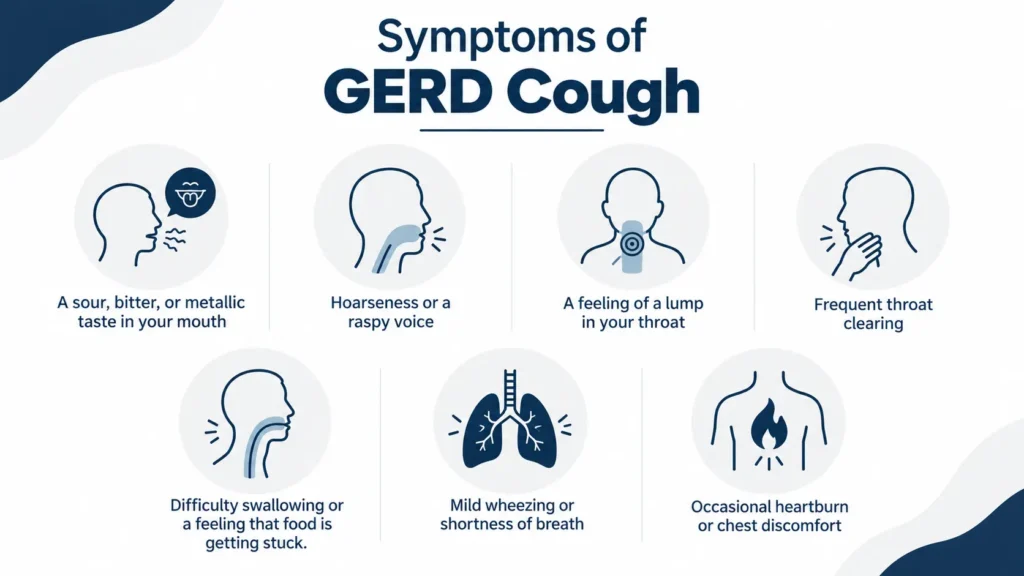
A GERD cough is usually dry, persistent, and tickly, almost as if something is stuck in your throat. Unlike a cough caused by a cold or chest infection, it often feels like the irritation is coming from your throat rather than your lungs.
You may notice the cough gets worse after meals, when you lie down, or first thing in the morning.
Along with the cough itself, you may notice:
- A sour, bitter, or metallic taste in your mouth
- Hoarseness or a raspy voice
- A feeling of a lump in your throat
- Frequent throat clearing
- Difficulty swallowing or a feeling that food is getting stuck.
- Mild wheezing or shortness of breath
- Occasional heartburn or chest discomfort (though not always present)
Not everyone experiences every symptom. Some people have silent reflux, where a chronic cough and throat irritation are the main signs, even without the typical burning sensation of heartburn.
What causes GERD-related cough?
Your GERD cough happens when stomach acid weakens or bypasses the lower esophageal sphincter, the muscle that normally keeps acid in your stomach. Once acid moves upward, it can irritate nerve endings in your esophagus and throat, both of which trigger coughing.
Common contributors include:
- Eating large or high-fat meals
- Lying down or going to bed soon after eating
- Being overweight or obese
- Smoking or drinking alcohol
- Certain medications, such as some antibiotics and pain relievers
- Pregnancy, which increases the pressure on the stomach
- A hiatal hernia, where part of the stomach moves above the diaphragm
- Wearing tight clothing around the waist that increases abdominal pressure
- Frequent overeating or eating late at night
Not everyone has the same triggers. Tracking your meals and symptoms can help you spot what may be causing your acid reflux cough to flare up.
GERD cough vs Allery, Asthma & Postnasal Drip
It’s easy to mistake a GERD cough for one caused by allergies, asthma, or postnasal drip, since all four can cause a similar dry, nagging cough. A few clues can help tell them apart:
- Allergies often bring sneezing, itchy eyes, and a runny nose along with the cough.
- Asthma usually includes wheezing and tightness in your chest, and symptoms often flare with exercise or cold air.
- Postnasal drip tends to cause a “tickle” at the back of your throat and frequent throat clearing, often tied to sinus issues.
- Acid reflux cough is more likely to worsen after meals, at night, or when you lie flat, and may come with a sour taste or hoarseness.
Because these conditions can overlap or even occur together, a proper medical evaluation is the only reliable way to know what’s really behind your cough.
How is GERD cough diagnosed?
Diagnosing a GERD cough starts with a detailed conversation about your symptoms, medical history, and eating and sleeping habits.
Your doctor may also recommend:
- Upper endoscopy, to check your esophagus for inflammation or damage
- pH monitoring, which measures acid levels in your esophagus over 24 hours
- Esophageal impedance testing, to track both acid and non-acid reflux
- A trial of acid-suppressing medication, to see if your cough improves
Since chronic cough can have several causes, your doctor may also rule out asthma, sinus issues, or medication side effects before confirming GERD as the cause.
What are the treatment options for GERD cough?
Finding effective GERD cough treatment requires lowering the amount of acid your stomach produces and keeping it from moving upward.
- Over-the-counter antacids can offer short-term relief from occasional symptoms.
- Acid-reducing medications, such as H2 blockers or proton pump inhibitors (PPIs), reduce how much acid your stomach produces and are commonly used for a persistent cough linked to reflux.
- Prescription-strength options may be recommended if over-the-counter doses aren’t enough.
- Surgery, such as fundoplication, is reserved for severe or long-term cases that don’t respond to other treatments.
Most people notice improvement within a few weeks of consistent treatment, though full relief can take longer since the airway needs time to heal from ongoing irritation.
Lifestyle changes that can help with GERD cough
Simple daily habits can make a real difference alongside medical treatment:
- Maintain a healthy weight to reduce pressure on your stomach
- Avoid lying down for at least three hours after eating
- Elevate the head of your bed by a few inches
- Eat smaller meals and chew slowly
- Cut back on caffeine, alcohol, fatty foods, chocolate, and spicy dishes
- Quit smoking, since it weakens the muscle that keeps acid down
- Avoid tight-fitting clothing around your waist
- Sleeping with the head of your bed elevated if advised by your doctor
When should you see a GERD specialist?
While a cough is often just a nuisance, you should never ignore a long-term symptom. It is time to schedule a consultation with a gastroenterologist if:
- Your cough has lasted for more than several consecutive weeks without improving.
- You experience “red flag” symptoms like unexplained weight loss, difficulty swallowing food, or choking sensations at night.
- You frequently experience choking or recurrent chest infections.
- You find yourself coughing up blood or dark materials.
- Your symptoms are severe enough to disrupt your sleep every single night.
Why choose King's College Hospital Bahrain for GERD diagnosis and treatment?
Persistent reflux symptoms shouldn’t be ignored. Early evaluation can help identify the cause, relieve symptoms, and reduce the risk of complications.
At King’s College Hospital Bahrain, you receive evidence-based care from experienced gastroenterology specialists who investigate the underlying cause of your symptoms rather than simply treating the cough.
Patients benefit from:
- Comprehensive assessment for chronic cough and acid reflux
- Advanced diagnostic testing, including endoscopy when appropriate
- Personalized treatment plans based on international clinical guidelines
- Multidisciplinary care with gastroenterologists and related specialists
- Ongoing support to help manage GERD and reduce symptom recurrence
Whether you’re experiencing frequent heartburn, unexplained throat symptoms, or a persistent GERD cough, early evaluation can help you receive the right diagnosis and appropriate treatment.
FAQs
Yes. Many people with a GERD cough never experience classic heartburn. This is sometimes called silent reflux, and the cough may be the only noticeable symptom.
It can last for weeks or months if untreated. With proper treatment, many people see improvement within a few weeks, though full resolution can take longer.
A GERD cough is usually dry, without mucus. If you’re coughing up phlegm regularly, another cause may be involved, and it’s worth getting checked.
Yes. GERD cough often worsens at night because acid reflux is more likely when you’re lying flat.
Yes. Repeated acid reflux can irritate the throat and voice box, causing symptoms like hoarseness, a sore throat, and frequent throat clearing.
Common triggers of GERD cough include fatty or fried foods, spicy foods, chocolate, caffeine, alcohol, tomatoes, and citrus fruits. Triggers can vary from person to person, so keeping a food diary can help.
Doctors typically start with a symptom review, then may use endoscopy, pH monitoring, or a trial of acid-reducing medication to confirm the diagnosis.
GERD cough can often be well managed and significantly reduced with treatment and lifestyle changes, though “cured” depends on the underlying cause and how consistently you manage triggers.
Yes. Acid reflux can make you cough by irritating the esophagus, throat, or voice box and triggering the cough reflex. The cough is usually dry and may worsen after meals, when lying down, or at night. Some people develop a GERD cough even without experiencing heartburn.
PPIs can be effective for many people, especially when reflux is confirmed as the cause. However, responses vary, and your doctor may adjust your treatment accordingly.
If your cough continues for more than 8 weeks, doesn’t respond to standard treatment, or is accompanied by symptoms such as difficulty swallowing or weight loss, it’s time to see a gastroenterologist for a thorough evaluation.
OUR DOCTORS

Dr Vinoda Metta
Consultant - Neurology

Dr Ranjeev Bhangoo
Consultant - Neurosurgery

Dr Imtiaz Ahmed Hashmi
Specialist - Orthopaedic Surgery