Gallbladder Pain: Symptoms, Causes, and When to See a Doctor
At a glance: Key takeaways
|
Gallbladder pain can come on suddenly and may be difficult to tell apart from other types of abdominal pain. In many cases, it is linked to gallstones that block the flow of bile. However, other conditions can also cause pain in the upper abdomen.
Knowing the typical gallbladder pain location, what gallbladder pain feels like, and which symptoms need medical attention can help you decide when to seek care.
Where is Gallbladder pain located?
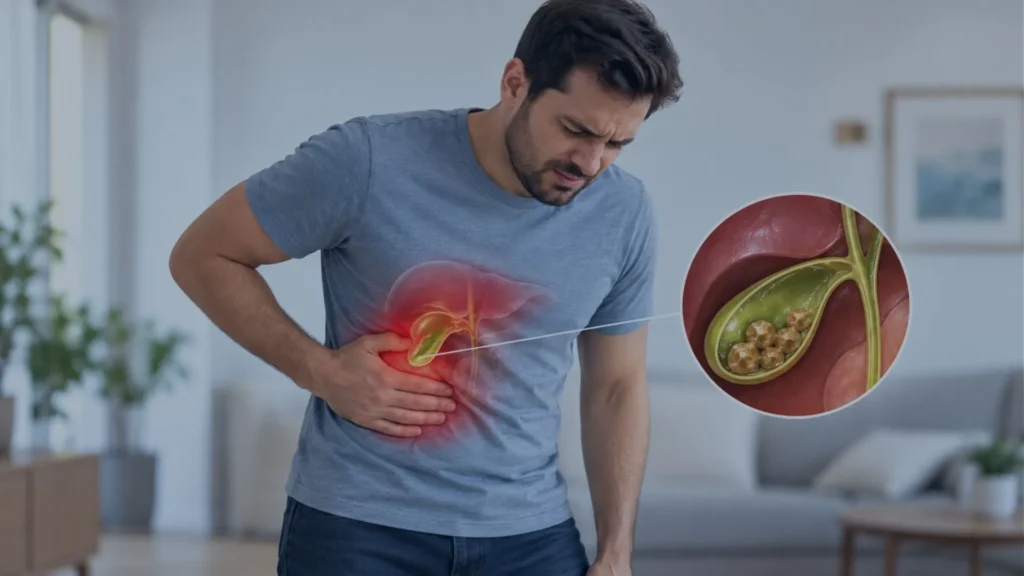
Your gallbladder is a small, pear-shaped organ located beneath the liver in the upper right side of your abdomen. It stores bile, a digestive fluid produced by the liver that helps your body break down fats.
Gallbladder pain is usually felt in the upper right part of your belly, right under your rib cage. That said, gallbladder pain doesn’t always stay in one neat spot. You may also notice it:
- Spreading toward the center of your abdomen, just below your breastbone
- Radiating to your right shoulder blade or upper back
- Felt as chest discomfort, which is sometimes mistaken for heart-related pain
This spreading pain is called referred pain, and it happens because nerves in the area overlap. If you’re unsure whether your discomfort is coming from your gallbladder, your stomach, or something else, that’s exactly the kind of question a doctor can help you sort out.
What does Gallbladder pain feel like?
Gallbladder pain can feel different from person to person, but certain patterns are common. You may notice:
- A sudden, intense pain that builds quickly and peaks within an hour
- A cramping or squeezing sensation, rather than a constant dull ache
- Pain that makes it hard to sit still or get comfortable
- Discomfort that starts 30 minutes to a few hours after eating, especially fatty or fried food
- Pain that eases on its own after a few hours, only to return later
This pattern of pain that builds, peaks, and slowly fades is known as biliary colic. If the pain lasts far longer than usual or comes with other symptoms, it could signal gallbladder inflammation, which needs prompt evaluation.
Common Gallbladder pain symptoms to watch for
While abdominal discomfort is the hallmark sign, other gallbladder pain symptoms frequently accompany the ache. Recognizing these connected signs can help your care team reach an accurate diagnosis.
- Nausea or vomiting
- Bloating or gas after meals
- A feeling of fullness that lingers
- Fever or chills (a sign of possible infection)
- Yellowing of the skin or eyes (jaundice)
- Dark urine or pale, clay-colored stools
If you notice fever, chills, or jaundice alongside abdominal pain, this points toward a more serious gallbladder complication and needs medical attention without delay.
What causes Gallbladder pain?
- Gallstones: Hardened deposits of cholesterol or bile that form inside the gallbladder and can block its opening
- Cholecystitis: Inflammation of the gallbladder, often caused by a gallstone becoming stuck
- Biliary colic: Pain caused by a temporary blockage that increases pressure inside the gallbladder
- Bile duct blockage: A stone may move from the gallbladder into the bile duct, blocking the normal flow of bile to the intestine
- Gallbladder sludge: Thickened bile that has not formed into stones but can still cause discomfort and may contribute to blockage
- Gallbladder polyps or tumors: Less common, but worth ruling out with imaging if symptoms persist
Who is more likely to get Gallbladder pain?
Gallstones can develop for several reasons. Some risk factors cannot be changed, while others are linked to weight, diet, or certain health conditions:
- Being female, especially during reproductive years or pregnancy
- Being over 40 years old
- Carrying excess body weight, or having lost weight very quickly
- Having a family history of gallstones
- Living with type 2 diabetes
- Taking estrogen-containing medications or hormone therapy
Having one or more of these factors doesn’t mean you’ll definitely develop gallbladder pain, but it’s useful context if you’re already noticing symptoms.
When to see a doctor for Gallbladder pain?
Not every digestive ache requires emergency care, but persistent or severe gallbladder pain should never be ignored. Understanding when to seek medical help prevents mild issues from progressing into dangerous infections or organ damage.
See a doctor promptly if you notice:
- Pain that lasts longer than a few hours without easing
- Pain so severe you can’t find a comfortable position
- Fever or chills along with abdominal pain
- Yellowing of your skin or eyes
- Persistent vomiting or inability to keep fluids down
- Repeated episodes of pain after eating, even if each one resolves
Treatment options for Gallbladder pain
Gallbladder pain treatment depends on the cause, how severe your symptoms are, and whether complications are present. Your doctor will usually consider one of the following approaches.
- Watchful waiting and lifestyle changes: If your gallstones aren’t causing symptoms, most doctors won’t recommend treatment right away. You may just be advised to watch for warning signs and make gradual dietary adjustments, such as reducing fatty and fried foods, which can help ease pressure on the gallbladder.
- Pain and symptom management: For a mild episode, your doctor may recommend pain relief and anti-nausea medication while monitoring you to see if the episode resolves on its own, which many do.
- Endoscopic retrograde cholangiopancreatography (ERCP): If a gallstone blocks your bile duct, ERCP can be used to remove the stone and restore bile flow. A stent may also be placed when needed.
- Cholecystectomy (gallbladder removal surgery): When gallstones cause repeated pain, inflammation, or other complications, your doctor may recommend removing the gallbladder. This is called a cholecystectomy and is commonly performed using laparoscopic, or keyhole, surgery.
Taking your Gallbladder pain seriously at King's College Hospital Bahrain
If you have ongoing abdominal pain or symptoms that may involve your gallbladder, a gastroenterology assessment at the Bahrain clinic of King’s College Hospital can help identify the underlying cause.
Reasons why patients choose King’s College Hospital London Dubai – Bahrain Clinic:
- A multidisciplinary team covering gastroenterology, hepatology, and general surgery under one roof
- Diagnostic support through advanced imaging and endoscopy
- Care based on King’s College Hospital London standards and evidence-based medical practice
- A collaborative approach that keeps you informed at every stage, from diagnosis through recovery
If gallbladder pain has been part of your routine lately, reaching out to a specialist team sooner rather than later can help you understand what’s going on and what your options are.
FAQs
It is uncommon. Gallbladder pain usually affects the upper right abdomen, although referred pain can sometimes make the location less clear. Left-sided pain is more often caused by another condition.
Eating triggers the gallbladder to contract and release bile, particularly after a fatty or fried meal. If a gallstone is blocking the gallbladder’s outlet, this contraction can increase pressure and lead to pain.
Acid reflux is usually felt as a burning sensation in the chest or throat and may cause a sour taste. Gallbladder pain is more often felt under the right ribs and can sometimes spread to the back or right shoulder.
No. Gallbladder pain typically occurs in the upper right or middle abdomen in both females and males. However, females have a higher risk of developing gallstones, partly due to hormonal factors such as estrogen exposure and pregnancy.
A severe attack can cause intense, steady pain under the right ribs or in the upper abdomen. The pain may spread to the back or right shoulder and last for several hours.
Yes. Many people have repeated episodes triggered by meals before finally seeking care. Recurring pain is a sign your gallbladder should be evaluated, even if each episode passes on its own.
Yes. You can live a normal, healthy life without a gallbladder. Your liver continues to produce bile, which flows directly into the small intestine to help digest fats. Some people experience temporary or ongoing digestive symptoms, such as diarrhoea or bloating, after gallbladder removal.
Get urgent medical care if the pain is severe or does not go away, especially if you also have fever, chills, yellowing of the skin or eyes, or repeated vomiting. These can be signs of an infection or a blocked bile duct that needs prompt treatment.
OUR DOCTORS

Dr Vinoda Metta
Consultant - Neurology

Dr Ranjeev Bhangoo
Consultant - Neurosurgery

Dr Imtiaz Ahmed Hashmi
Specialist - Orthopaedic Surgery