
Stereotactic breast biopsy / mammogram-guided breast biopsy in Bahrain
Breast Care Centre
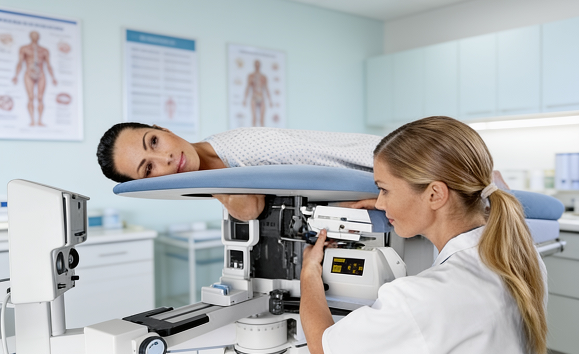
A stereotactic breast biopsy can sound intimidating, especially after a mammogram shows calcifications, architectural distortion, or another area that needs closer investigation. Despite the name, it is a straightforward image-guided procedure that helps identify the cause of an abnormal mammogram finding by collecting a small tissue sample.
At King’s College Hospital London, Dubai Bahrain Clinic, patients seeking a stereotactic breast biopsy Bahrain receive specialist breast assessment, imaging review, biopsy planning, and coordinated follow-up care. The breast team ensures that each patient understands the procedure and the reasons it has been recommended.
This type of breast biopsy in Bahrain is most often used when a breast change is visible on a mammogram but cannot be accurately targeted with ultrasound. By using detailed mammogram images to guide the biopsy needle, the procedure provides a precise tissue sample, helping confirm the diagnosis while avoiding unnecessary surgery whenever possible.
What is a stereotactic breast biopsy?
A stereotactic breast biopsy, also called a mammogram-guided breast biopsy, is a minimally invasive procedure used to take tissue samples from a breast abnormality seen on mammography. It uses mammogram images and computer guidance to help the radiologist position the biopsy needle accurately within the area of concern. King’s describes it as a non-surgical way of assessing breast abnormalities, particularly when a mammogram shows suspicious calcifications, a mass, or distortion in the breast tissue.
It is most often recommended when the abnormality is visible on a mammogram but not clearly seen on an ultrasound, which is why it has a different role from an ultrasound-guided breast biopsy. Rather than removing the whole lesion, the procedure removes small tissue samples so the pathology team can examine them under a microscope and confirm whether the finding is benign, high-risk, or cancerous.
What does a stereotactic breast biopsy help diagnose?
The purpose of a stereotactic biopsy is to move from an imaging abnormality to a tissue diagnosis. In practical terms, it helps answer whether a suspicious mammogram finding is something benign, something that needs monitoring, or something that needs treatment planning.
You may be referred for this type of biopsy if a mammogram shows:
- Microcalcifications that look suspicious or newly developed
- Architectural distortion, where the normal breast tissue pattern looks pulled or disrupted
- An area of abnormal tissue change that needs sampling
- A mammographic mass or density that requires tissue confirmation
- A new abnormality at a previous surgery site
If cancer or atypical cells are found, that information becomes part of the wider breast treatment plan. If the biopsy is benign, it can also spare you from more invasive surgery and help your team decide whether surveillance or follow-up imaging is enough.
When should you see us?
You should consider specialist breast review if you have been told you need a stereotactic biopsy, if your mammogram report mentions calcifications or an abnormal area that needs tissue sampling, or if you have already had breast imaging elsewhere and want a breast specialist to review the findings and next steps.
Patients often come to King’s Bahrain Clinic when they need help with one of three things:
- Understanding whether a mammogram abnormality really needs biopsy
- Arranging the right image-guided biopsy pathway rather than a more invasive procedure
- Making sure the biopsy result is interpreted within a proper breast care plan, especially if surgery, further imaging, or follow-up may be needed
You may also want specialist input if you have persistent breast symptoms but the imaging picture is unclear, or if you have been advised to have a biopsy and want that decision reviewed by a breast-focused team.
What conditions do we treat and what services do we offer?
Patients who need stereotactic breast biopsy Bahrain are often not looking for a “procedure page.” They are looking for clarity around an abnormal mammogram and what happens next. King’s Bahrain Clinic can support patients with assessment and care planning for:
- Stereotactic breast biopsy / mammogram-guided breast biopsy
- Suspicious microcalcifications on mammogram
- Abnormal mammogram findings that need tissue diagnosis
- Architectural distortion or subtle breast tissue abnormalities
- Breast lesions that are visible on mammography but not well seen on ultrasound
- Benign and high-risk breast lesions that need biopsy planning
- Review of outside mammogram, ultrasound, MRI, or biopsy recommendations
- Breast symptoms or imaging findings that need coordinated breast surgeon and breast radiology input
Your care may include a clinical breast assessment, review of previous imaging, biopsy planning, pathology review, follow-up, and referral for further imaging, surgery, or treatment if needed.
Who performs stereotactic breast biopsy Bahrain?
At King’s College Hospital London, Dubai Bahrain Clinic, stereotactic breast biopsies are performed by an experienced multidisciplinary breast team, including specialist breast surgeons and breast imaging experts.
Patients receive comprehensive assessment, accurate image-guided biopsy, and personalised care, with biopsy results used to guide the most appropriate treatment or follow-up plan.
Why choose King’s College Hospital Dubai?
The biopsy itself is only one part of the process. Equally important is having your mammogram findings, biopsy results, and any follow-up care managed within the same specialist breast service. This helps ensure that every stage of your care is coordinated and based on a complete understanding of your case.
At King’s Bahrain Clinic, breast surgeons, breast imaging specialists, and radiologists work together to review biopsy results and recommend the most appropriate next steps. Whether the biopsy confirms a benign condition, identifies a high-risk lesion that needs further treatment, or detects breast cancer, patients receive coordinated care and a clear treatment plan without unnecessary delays.
How can I book an appointment?
To book an appointment with King’s Bahrain Clinic, you can call the clinic or complete the online appointment request form. If you already have a mammogram report, biopsy recommendation, or outside imaging, bring it with you so the team can review the findings and advise on the most appropriate next step.
FAQs
King’s College Hospital London, Dubai Bahrain Clinic provides specialist assessment and image-guided breast biopsy services for patients with suspicious mammogram findings. Patients benefit from a multidisciplinary breast team, advanced breast imaging, accurate tissue diagnosis, and personalised follow-up care.
At King’s College Hospital London, Dubai Bahrain Clinic, stereotactic breast biopsies are performed by an experienced multidisciplinary breast team, including specialist breast surgeons and breast imaging experts. The team provides comprehensive assessment, precise image-guided biopsy, and treatment planning based on the biopsy results.
No. A stereotactic biopsy is a minimally invasive needle biopsy guided by mammography. It is used to sample tissue from an abnormal area without removing the whole lesion surgically.
Usually because the abnormality is best seen on mammogram rather than ultrasound. This often happens with suspicious calcifications or subtle tissue distortion.
No. A biopsy means there is an area that needs tissue diagnosis. Many biopsies show benign changes, but the biopsy is important because imaging alone cannot always tell exactly what the abnormality is.
A stereotactic breast biopsy may be recommended for suspicious microcalcifications, architectural distortion, a mammographic mass, or a new abnormality seen on a mammogram that cannot be clearly targeted with ultrasound.
The next steps depend on the results. Benign findings may only need follow-up imaging, while high-risk or cancerous results may require further tests, a surgical review, or treatment planning with the breast team.